
Beyond the Rhine: Finding Real Connection in Ruggell’s Webcam Dating Scene
Look, I’ve been here in Ruggell for fifteen years. Came from the grit of Manchester, New Hampshire, and found myself in the quietest corner of Unterland. The contrast? It’s a hell of a thing. And nowhere is that contrast more vivid than in how we seek connection. Especially now. We’re a small community, conservative in many ways, yet the digital world has crashed our borders. So, let’s talk about webcam dating. Not as some abstract concept, but as something happening in bedrooms and home offices right here, right now. It’s messy, it’s complicated, and honestly? It’s fascinating.
People think because I’m a sexologist, I have all the answers. I don’t. But I’ve spent years talking to folks, observing, reading between the lines. And the questions I get about finding a partner, about sexual attraction, about the sheer loneliness that can exist in a place this beautiful… they’re changing. The old rules of courting at the Gasthof or meeting someone through a friend of a friend are still there. But now, there’s this screen. This portal. And for a lot of you, that’s where the search begins. Or ends. Or gets stuck in some weird digital limbo.
So, I’m writing this for EcocopyDating. It’s a project about sustainable relationships, about community, about not trashing your emotional landscape the way we’ve trashed parts of the physical one. And webcam dating? It’s a piece of that puzzle. A big, weird, pixelated piece.
What is Webcam Dating, Really, for Someone in Ruggell?
It’s not just porn. Let’s get that straight. I mean, it can be, sure. But strip away the assumption. At its core, it’s using live video to facilitate intimacy. Could be a casual chat on a platform like Chaturbate or BongaCams, could be a prelude to meeting someone from an app like Tinder or OkCupid, could be a paid service, an escort, connecting with a provider for a virtual GFE—girlfriend experience. For folks in a place like this, where the dating pool can feel the size of a garden pond, it’s an ocean. An ocean you access from your living room. The ontological shift here is profound: we’ve decoupled physical presence from intimate encounter. The body is here, in Ruggell, but the connection is… everywhere.
And that changes everything. It changes how you present yourself, how you perceive the other, what you expect. You’re not just a person in Unterland anymore. You’re a digital entity, competing for attention with thousands of others. It’s exhausting and exhilarating in equal measure. I’ve had clients tell me it’s the first time they’ve felt truly seen, and others who say it’s made them feel more invisible than ever.
Is it just a fad, or is this the new normal for dating?
Honestly? It’s both. It’s a fad in the sense that the specific platforms come and go. Remember Chatroulette? That was a wild west. But the *mechanism*—using video to bridge the gap before, or instead of, meeting—that’s here to stay. We’ve normalized it. The pandemic just slammed the accelerator. For a small country like ours, it’s a lifeline. It’s the difference between a limited, local search and accessing a global network of potential partners or experiences. Will it replace walking up to someone in Vaduz? No. But it’s a permanent, powerful tool in the kit. I think we’re past the point of no return.
Why Webcam Dating in a Place as Quiet as Ruggell?
That’s the million-dollar question, isn’t it? Why would someone here need it? The reasons are as varied as the people. Anonymity is a big one. In a village where everyone knows your name, your business, your family’s history… the screen is a shield. You can explore facets of your sexuality, your desires, without the town gossip mill churning. You can be curious. You can be vulnerable in ways that feel impossible at the local bar. And then there’s the sheer logistics. We’re tucked away. Dating someone from Schaan? Fine. From Balzers? A bit of a drive. From Zurich? That’s a production. Webcam dating collapses that distance. You can have a “date” on a Tuesday night without the commitment of a two-hour round trip. It’s sustainable dating, in a way. Lower carbon footprint. Ha. There’s my eco-activist showing.
But there’s a darker undercurrent too. Loneliness. It’s real here. The postcard-perfect villages can feel isolating, especially for newcomers or people who don’t fit the traditional mold. Webcam dating becomes a way to scream into the void and hope someone screams back. It’s a search for a witness to your existence. And sometimes, that search leads to incredible connection.
Is it safe? What about privacy here in Unterland?
Safe? Define safe. Your physical safety? Probably higher than meeting a stranger from the internet in person for the first time. Your digital and emotional safety? That’s a whole other beast. Privacy in a digital context is an illusion, especially in a small place. Your IP address is a breadcrumb trail. That background you didn’t think about? That’s your kitchen, your bookshelf, that weird painting your aunt gave you. Someone local might recognize it. I’m not saying this to scare you, but to ground you. Be smart. Use a VPN. Don’t show identifiable landmarks. And for god’s sake, don’t show your face if you’re on a platform that’s more… adult-oriented, unless you’re prepared for the consequences. Once it’s out there, it’s out there. There’s no delete button on the internet.
And emotional safety? That’s trickier. You’re letting someone into your most private space. The vulnerability is immense. People can be cruel. They can be manipulative. They can record you without your consent. The laws are catching up, but they’re always playing defense. My advice? Trust your gut. If a conversation feels off, it is. If someone is pressuring you, end it. Your well-being is worth more than any potential connection.
How to Choose the Right Platform for What You’re Seeking?

This is where intent becomes everything. You wouldn’t use a chainsaw to slice bread. Well, you could, but it’d be a mess. Same with these sites. Your goal dictates your platform. It’s about ontological alignment. What is the nature of the encounter you’re seeking? That defines the space.
So let’s break it down, Ruggell-style.
For Casual Chat and Exploration: Chaturbate, BongaCams, MyFreeCams
These are the big public squares. Thousands of rooms, thousands of performers, mostly women, but a growing diversity. You can dip your toe in for free, watch, chat. The intent here is often informational or purely recreational. You’re browsing. You’re curious. Maybe you tip a performer, engage in a little public chat. It’s low-commitment. Think of it like walking through a market. You’re not buying anything yet, just looking. The attraction here is the sheer variety. You can explore desires you didn’t even know you had. But remember, these are performers. It’s a show. The connection, while it can feel real, is transactional at its core. The performer is working. Keep that in mind.
For Finding a Partner: Tinder, OkCupid, Bumble with a video chat step
This is the hybrid model. You match based on profiles, you chat, and then you escalate to a video call. The intent here is commercial in the sense of “partner shopping,” but with a romantic goal. The video call is the crucial filter. It’s the reality check. Photos can be years old, angles can be deceiving. A five-minute video chat tells you more than weeks of texting. Does the conversation flow? Is there eye contact? Do they look like their pictures? It’s a low-stakes way to vet someone before investing in that trip to meet them halfway. For us in Ruggell, it’s essential. Don’t meet someone from Feldkirch without a video date first. Seriously. It saves time, money, and disappointment.
For a Paid, Directed Experience: Seeking virtual GFE from escort services or specific platforms
This is the most misunderstood, and frankly, the most honest end of the spectrum. You are hiring a professional for intimacy. Could be an escort offering virtual sessions, a cam model on a private show, or someone on a site like Seeking. The intent is commercial, explicitly. You are paying for their time, their attention, their performance of intimacy. And you know what? There’s something refreshingly transparent about it. No games. No ambiguity. You want a girlfriend experience for an hour? You pay for it, you get it. For someone in a small town, it can be a safe, discreet way to explore a specific fantasy or just feel desired without any strings. The ethics are a whole other conversation—labor rights, exploitation, all of it—but for the user, it’s a direct transaction. The quality of connection can be surprisingly high. A good professional is a master of emotional attunement. They can make you feel like the center of the universe. But never forget, it’s a performance. A beautiful, skilled, and valuable performance, but a performance nonetheless.
The Unspoken Psychology of the Screen

Let’s get into the messy stuff, the stuff they don’t put in the user manuals. The screen isn’t a neutral window. It’s a magnifying glass and a distorting mirror. It amplifies certain things and completely hides others. I’ve seen it in my practice. The psychology is wild.
First, there’s the intimacy paradox. You can be more vulnerable, more open with a stranger online than you can with your partner of ten years. Why? Because the stranger has no power over your daily life. They can’t hurt you the same way. The screen creates a safety zone. But that also means the connection can be brittle. It’s built on a narrow bandwidth of interaction. You miss the micro-expressions, the scent, the subtle shift in body temperature. You’re connecting with an idea of a person, a curated version. And when you finally meet, the real person can feel like a disappointment. They don’t match the digital ghost you’ve been interacting with.
Then there’s the issue of objectification. It flows both ways. You’re looking at a grid of faces, swiping, clicking. It’s easy to forget there’s a whole, complex human on the other side. This is especially acute on adult platforms. The performer becomes a vessel for your fantasy. And you, for them, become a source of income. It’s a dehumanizing loop if you’re not careful. The key, I think, is mindfulness. To remember the humanity. To see the person, not just the pixels.
And what about the performers themselves? The escorts and cam models. I’ve talked to a few, not in a professional capacity, just… as humans. The stories are varied. Some love the autonomy, the control over their work. Others find it draining, alienating. The constant pressure to perform desire, to be “on.” It takes a toll. The emotional labor is real. So when you’re on the other side of that screen, remember there’s a person doing a job. A hard job. Basic decency should still apply.
Does it cheapen “real” intimacy? Or enhance it?
I get this question all the time. And my answer is always: it depends on you. If you use webcam dating as a substitute for all other forms of connection, if you hide behind the screen to avoid the scary, messy work of real-life relationships, then yes, it probably cheapens your capacity for intimacy. You’re practicing a solo sport. But if you use it as a tool, as a bridge, as a way to explore and learn? Then it can absolutely enhance your intimate life. It can teach you about your desires, improve your communication skills (because you actually have to talk), and help you clarify what you’re looking for. It’s not good or bad. It’s a technology. And like any technology, its moral weight is determined by the user. A hammer can build a house or smash a window. You are the hand that wields it.
The Legal Landscape in Liechtenstein: A Quick, Un-fun Guide
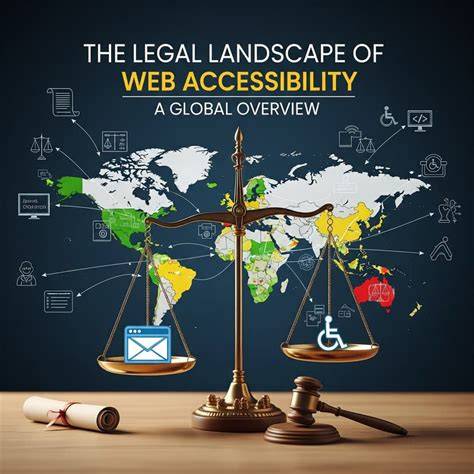
Okay, let’s get boring for a second. The law. It matters. Liechtenstein’s legal framework around these things is… evolving. It’s not as permissive as some places, not as restrictive as others. The key things to know: Revenge porn, sharing intimate images without consent, is a crime. It’s taken seriously. Recording a private webcam session without the other person’s knowledge? Almost certainly illegal. And soliciting prostitution is legal, but with regulations around brothels and public solicitation. For webcam-based paid services, it’s a bit of a grey area, as the transaction is happening in a digital space, often crossing borders. The general principle? If you’re a respectful, decent human being who isn’t trying to harm, exploit, or non-consensually record someone, you’re probably on the right side of the law. If you’re trying to be a creep, the law is increasingly designed to catch up with you. My advice? Don’t be a creep. It’s a low bar.
And for the performers out there reading this? Make sure you understand your tax obligations. Seriously. The Steuerverwaltung is not something you want to mess with. Income is income, whether it comes from a salary or tips on a cam site. I’m not your accountant, but I know enough to tell you to look into it.
Common Mistakes People Make (Myself Included)

I’ve been doing this work a long time. I’ve made mistakes. I’ve watched clients make the same ones over and over. Let’s skip the theory and get practical. Here’s what I see.
The biggest one? Falling for the projection. You’re not in love with the person on the screen. You’re in love with the version of them that exists in your head, fed by the limited information they’re giving you. Your brain fills in the gaps with your own desires. It’s a solo project. I’ve seen people wreck themselves over a webcam romance, only to meet the person and realize they’re completely incompatible. The chemistry was all in their own head. So stay grounded. Remind yourself constantly: “I don’t really know this person.”
Another classic? Ignoring the red flags. The person who always has an excuse for why their camera doesn’t work. The one who gets angry if you don’t want to do something. The one who asks for money for an emergency… for the third time. The screen can make it easier to dismiss these flags. You tell yourself, “Maybe they’re just shy,” or “It’s cultural.” No. It’s a red flag. Trust the pattern, not the excuse.
And then there’s the privacy fail. Using your real name. Showing too much of your room. Leaving personal documents visible in the background. I knew a guy, nice fella from Triesen, who didn’t realize his university diploma was on the wall behind him. Gave away his full name, his graduation year, his field of study. Took the other person about ten minutes to find his full work history on LinkedIn. It’s not paranoia if they’re really out to get you. Be smart. Blur the background. Use a fake name. Create a persona if you need to. Protect your real-world identity until you’ve built genuine trust.
Finally, the mistake of forgetting to just… live. It’s easy to spend hours, days, weeks in front of that screen, chasing a connection. But you’re missing the real one. The one with the cashier at the Migros who smiles at you. The one with the person walking their dog by the Rhine. The screen is a tool, not a life. Don’t let it become your whole world. The air here in Ruggell is pretty good. Go breathe it sometimes.
All that analysis boils down to one thing: don’t lose yourself in the machine.
So, What’s the Future of Connection in Unterland?

Will it still work tomorrow? No idea. The platforms will change. The tech will get more immersive. VR is coming. Haptic suits. The line between digital and physical will blur even more. But the core human needs—to be seen, to be desired, to connect—those won’t change. We’ll just have new tools to meet them. And for a place like Ruggell, that’s both a threat and an incredible opportunity. The threat is further isolation, further retreat into curated digital selves. The opportunity is a breaking down of the old barriers, a chance to connect with the world without leaving our beautiful, quiet home.
My hope? That we use these tools with intention. That we don’t let them use us. That we remember the person on the other side of the screen is as real as the person sitting next to us at the coffee shop. And that, whether we’re connecting through a webcam or across a table, we do it with honesty, with kindness, and with a healthy dose of skepticism for our own projections. It’s a mess. But it’s our mess. And honestly, it’s kind of beautiful to watch us figure it out.